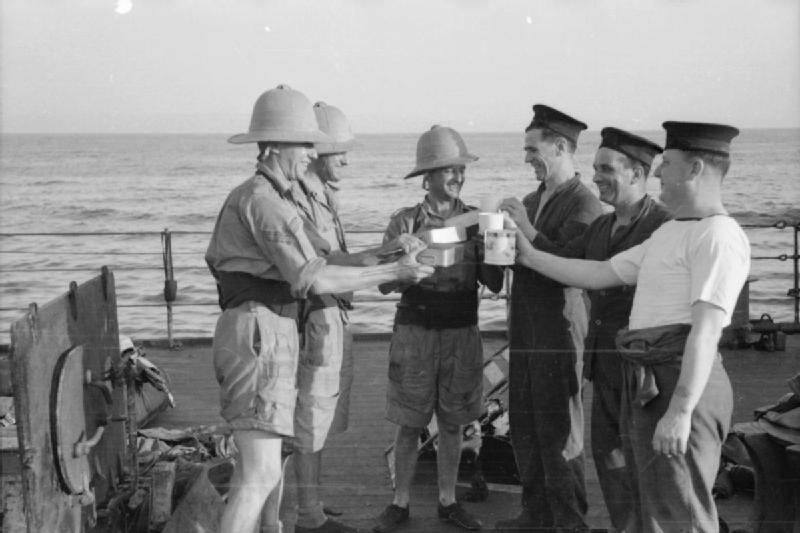
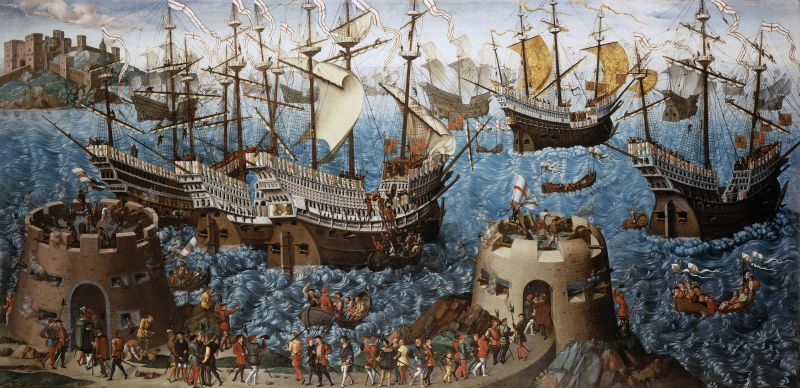
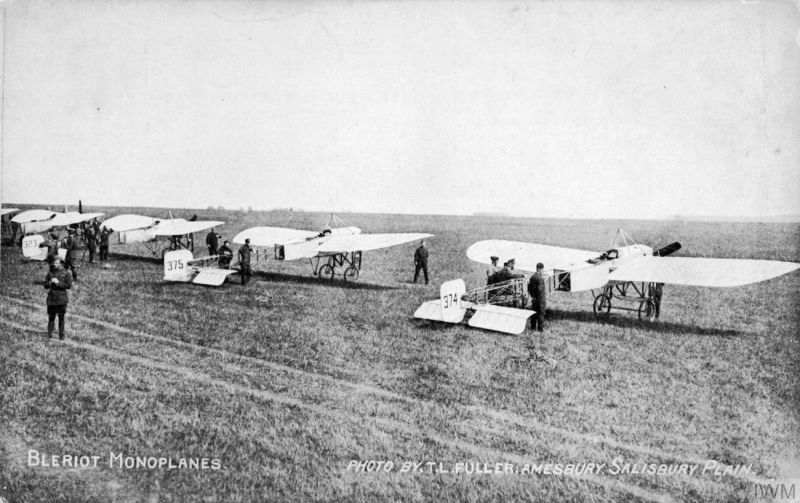
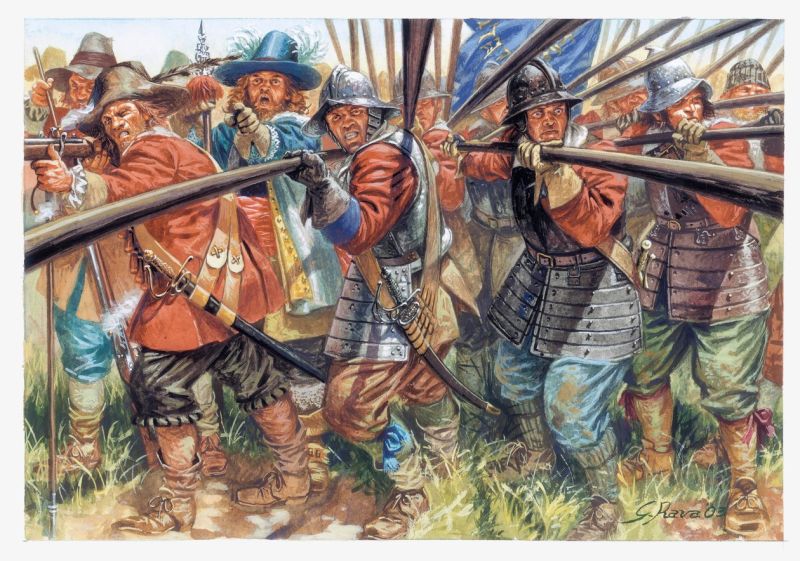
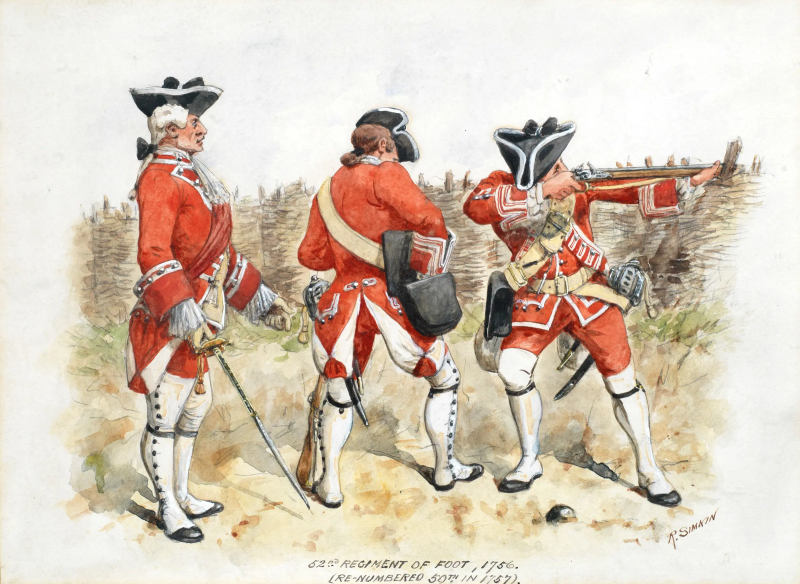
Soldiers and sailors of the United Kingdom toasting after surviving a torpedo attack during World War II. Why was one of these groups “British” and the other “Royal”?(Photo: Imperial War Museums)As a World War II buff, you surely know that the navy of the United Kingdom is called the Royal Navy, and the air force the Royal Force. It's been that way before, during and after World War II. The army, however, is not "the Royal Army." It's "the British Army." Do you know why it follows a different naming convention than other branches of the U.K. armed forces?England had neither a professional standing army nor a permanent navy in the Middle Ages. Land forces were a mix of local militias, troops set up and commanded by individual nobles, and foreign mercenaries. War fleets were temporary formations largely consisting of refitted merchant ships, used for a single action or campaign and then dispersed. A centralized Royal Navy only emerged in the early 16th century. The Wars of the Roses (1455-1487) ended with Henry Tudor seizing the English throne and ruling as Henry VII. Henry VII decided to strengthen the country's sea power, a goal carried out by his son, Henry VIII, best known in pop culture for his six wives. Between 1509 and 1514, Henry VIII increased his standing fleet from five ships to thirty, including the Henry Grace à Dieu, the largest warship in the world at the time. In 1546, Henry ordered another expansion to create what was called the "Navy Royal," a large permanent fleet with its own docks and administrative apparatus. This fleet and the surrounding institutions became the direct ancestors of the modern Royal Navy.“The Embarkation of Henry VII at Dover” – contemporary painting of the navy of Henry VIII (Painting: unknown 16th century painter)The Royal Air Force also has the word in its name, but for a different reason. It was created in 1918 by unifying the Royal Flying Corps and the Royal Naval Air Service (established 1912 and 1914, respectively). The Flying Corps was "royal" because it was created by a Royal Warrant of King George V. The Naval Air Service probably "inherited" the title from the Royal Navy, since it was originally under the direction of the Admiralty, the same department that also controlled the Navy.Some of the planes of the Royal Flying Corps, one of the predecessors of the Royal Air Force, in 1914 (Photo: Imperial War Museums)The army, however, had a different story. The first professional standing army in Britain was the New Model Army, established during the First English Civil War (1642-46). This war was fought by the Royalists (also called Cavaliers) supporting the king on one side, and the Parliamentarians (nicknamed Roundheads after their haircut) and Scottish Covenanters on the other. The New Model Army was not and could not be called "Royal" for a simple reason: it was established by Parliament to fight against the king.Modern artist’s depiction of the New Model Army, England’s first professional standing army (very much not royal) (Drawing: Giuseppe Rava)The war ended with a Parliamentarian victory and a brief, unpopular and unstable experiment at running England as a very undemocratic republic. The monarchy was restored in 1660, and the new king, Charles II, set about reforming the nation. The New Model Army was disbanded, but the king liked the idea of a professional standing army, so he established three forces called the English Army, the Scots Army and the Irish Army.There was a strong social resistance to a professional army at time, and the ensuing political wrangling ended with these three armies under the control of Parliament, so the word "Royal" would have been inappropriate in the name. The three armies were unified into the British Army in 1707, when England and Scotland united into a new country called Great Britain. The unified army followed its predecessors' example of being under Parliament's control, so the word "Royal" was never adopted into its name. Certain specific regiments, however, do have "Royal" in their names as an honorific title bestowed by the Sovereign for outstanding actions – the British Sovereign has the authority to bestow the "Royal" title on basically anything he likes. Join us on our Britain at War Tour to learn more about the history of the British armed forces!An officer and two soldiers of the first proper “British Army” in mid-18th century uniforms (Painting: Richard Simkin)